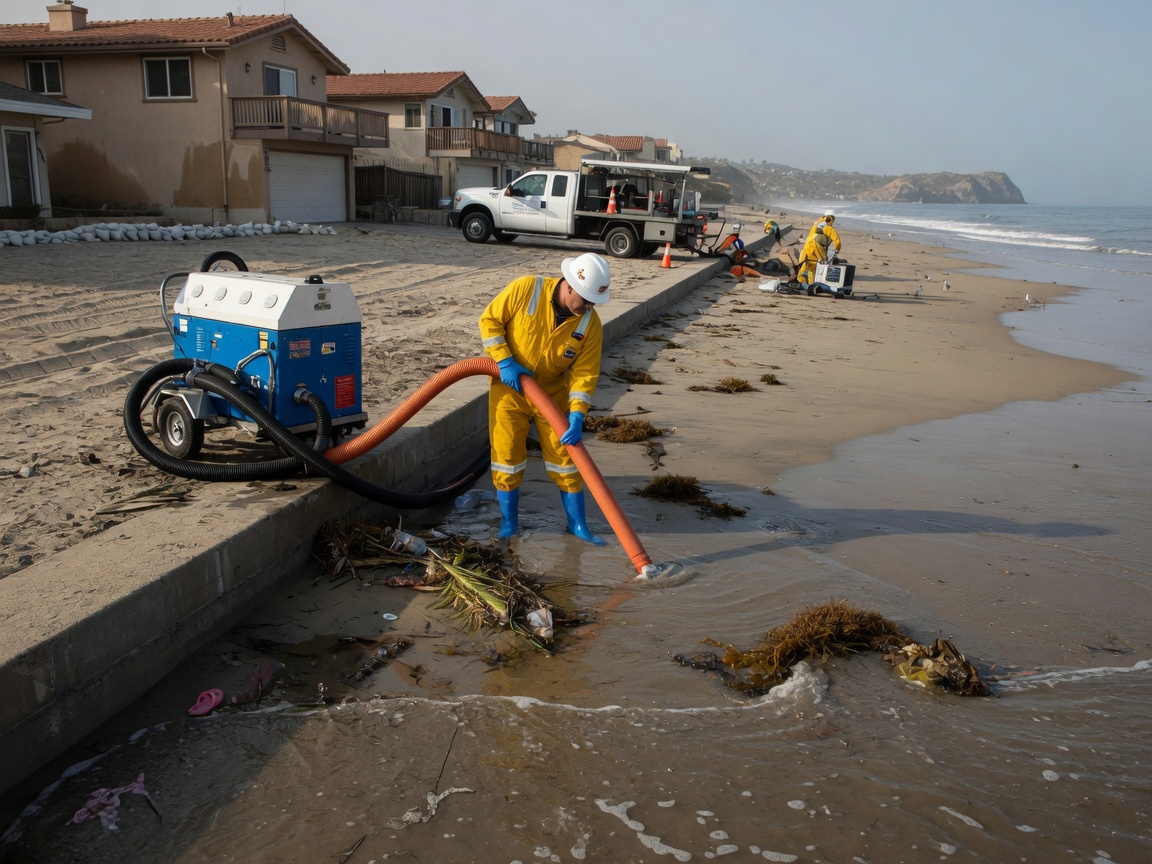
Palisades sits on the bluffs above Capistrano Beach with many mid-century homes that sit close to the ocean. Salt air and the mild Mediterranean climate keep humidity high year-round, so even small leaks from older pipes or roof valleys can spread fast through plaster and subfloors. Our crew based at 34700 Pacific Coast Hwy reaches these streets within minutes because we know the narrow access off the highway and the limited turnaround space on most lots.
Winter storms push water down the slopes toward Pacific Coast Highway and into yards that drain slowly toward the beach. When a pipe bursts or a window leaks during one of these events, moisture travels under tile and into crawl spaces that sit right on the bluff edge. We extract standing water first, then run targeted drying that accounts for the constant coastal breeze pulling moisture back into the structure.
Because Palisades properties back up to the park and the pier views, we work around tight easements and neighbor fences while still meeting insurance documentation requirements. Every job starts with a walk-through that notes the exact slope of the lot and any shared drainage lines that run toward Capistrano Beach Park.
Around Palisades
We regularly work near:
- 📍Capistrano Beach Park
- 📍San Clemente Pier
- 📍Pacific Coast Highway
- 📍Palisades bluff overlooks
Water Damage Restoration Capistrano Beach in Palisades — Local Notes
- •Narrow driveways and steep drop-offs off Pacific Coast Highway mean we bring smaller extraction units and extra hose length to reach Palisades homes without blocking the road.
- •Many Palisades houses from the 1950s and 1960s still have original cast-iron drains that crack where the bluff settles, sending water under slab foundations during rain.
- •Coastal humidity stays elevated even in summer, so we run commercial dehumidifiers longer than inland jobs to keep mold from forming behind baseboards near the ocean side.
- •Lots along the bluff edge often share French drains that empty toward Capistrano Beach Park; we trace these lines first to avoid pushing water into a neighbor’s property.