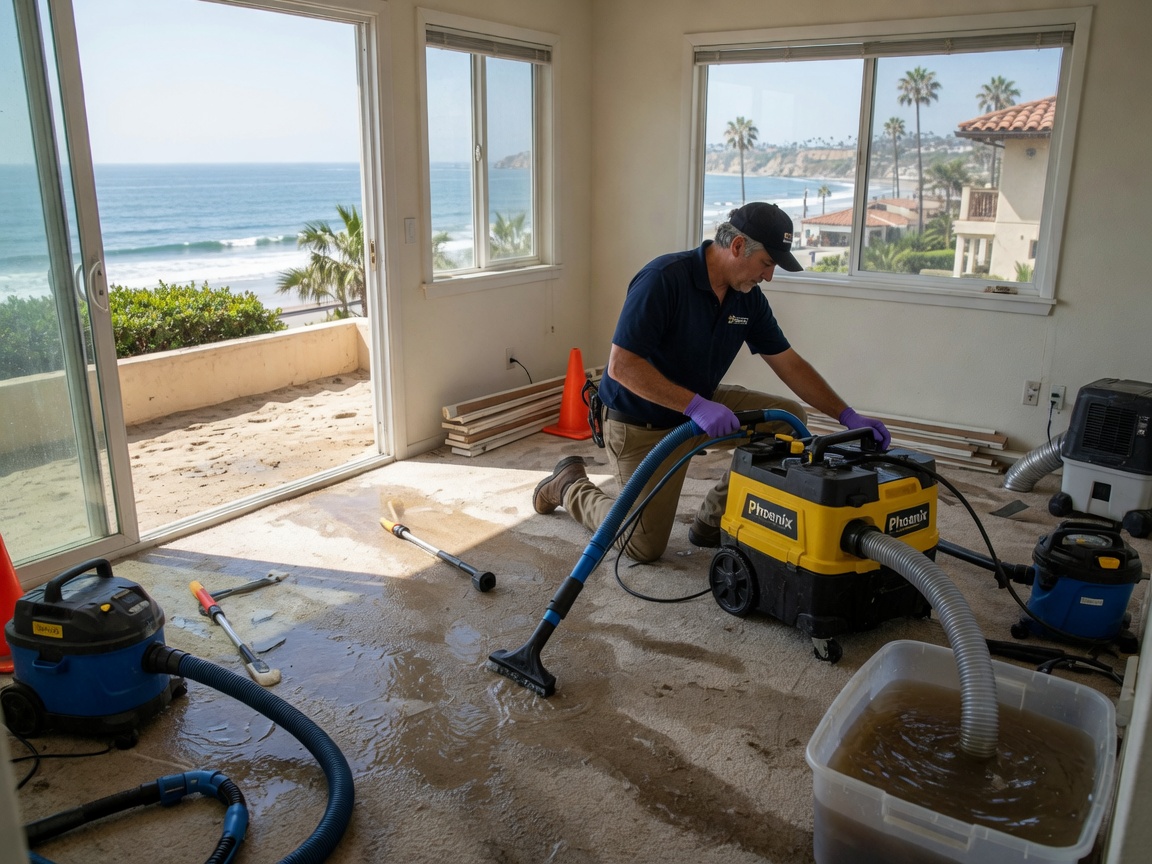
Water extraction in Capistrano Beach starts with identifying how moisture has traveled through slab foundations or crawl spaces common in homes built along Pacific Coast Highway. Coastal salt air accelerates corrosion in metal components inside walls, so technicians map moisture with infrared tools before any pumps run. Standing water from winter storms or pipe failures often pools under tile floors near Capistrano Beach Park, requiring removal rates that prevent salt residue from drawing additional humidity back into the structure.
Mild Mediterranean conditions keep daytime temperatures moderate yet trap moisture in older plaster and lath walls typical of Dana Point border homes. Extraction crews use low-grain dehumidifiers sized for the square footage while directing air movers into stud cavities to avoid pushing salt-laden air deeper into framing. Failure to reach hidden pockets behind cabinets or under vanities near San Clemente Pier leads to recurring musty odors months later.
Homes set on the slight slopes above the beach frequently experience water migrating from higher lots during heavy rain, saturating base plates and subfloors. Extraction here includes lifting sections of carpet or removing baseboards to insert drying wands, then documenting moisture readings at multiple depths so homeowners see when levels return to ambient coastal norms. This step prevents mold growth in the dense insulation found in many 1970s and 1980s builds along the highway corridor.
Technician insight
In Capistrano Beach, the thing that catches most people out with water extraction is how the mild coastal humidity keeps plaster walls from drying on their own after we pull the visible water, especially in homes built before modern vapor barriers were standard along Pacific Coast Hwy.
Post-storm water under tile near the park
Heavy rain pushed water under the tile in a single-story home two blocks from Capistrano Beach Park. We found moisture had wicked into the subfloor and base plates. Extraction wands and dehumidifiers ran for four days until readings matched the surrounding air, allowing the owners to reinstall without mold risk.
How it works
- 1
Initial Moisture Mapping
Technicians inspect affected rooms with moisture meters and thermal cameras to trace water paths through floors and walls.
- 2
Standing Water Removal
Submersible pumps and extraction wands pull bulk water from slabs, carpets, and low areas without spreading contaminants.
- 3
Cavity Drying Setup
Air movers and dehumidifiers are placed to reach behind baseboards and into wall voids common in coastal construction.
- 4
Ongoing Monitoring
Daily readings confirm moisture levels drop to match surrounding Capistrano Beach conditions before equipment is removed.
Pricing
Cost depends on water volume, number of affected rooms, and access to cavities in older coastal homes; 24/7 dispatch from our Pacific Coast Hwy location keeps response times short.