Capistrano Beach homes, many built decades ago along Pacific Coast Highway, often feature older plaster and lath or single-layer drywall that absorbs moisture quickly when water intrudes from heavy winter rains or coastal fog. The mild Mediterranean climate keeps temperatures moderate, yet the salt air accelerates corrosion on metal fixtures and promotes hidden mold growth behind cabinets once saturation occurs. Mitigation crews must account for the sandy soil near Capistrano Beach Park that allows water to migrate laterally under slabs, requiring moisture mapping with meters before any drying equipment is placed.
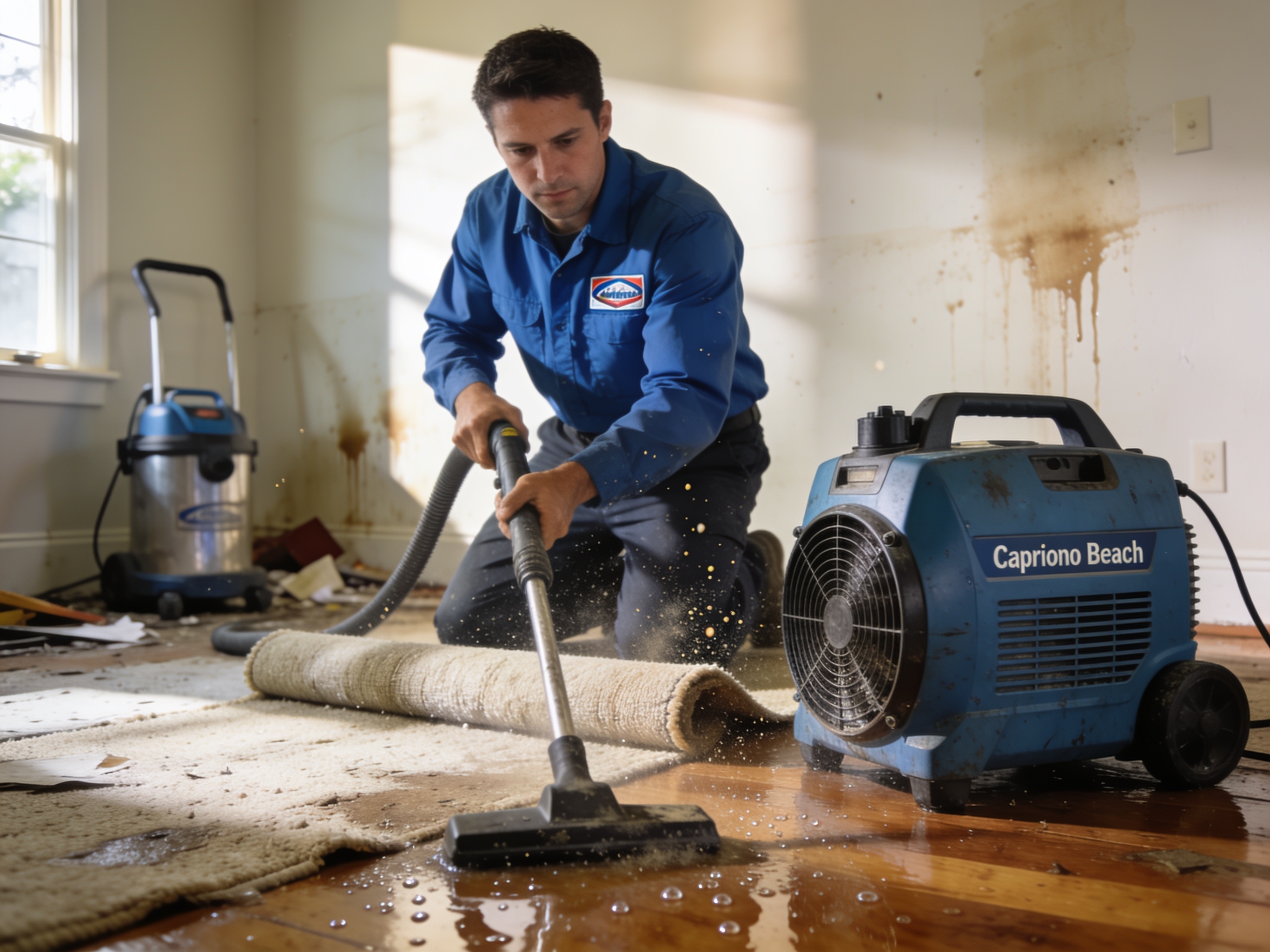
When a pipe bursts in a Dana Point-adjacent property or storm runoff reaches the San Clemente Pier area, the first priority is stopping the source and removing standing water to prevent secondary damage to hardwood floors common in beach cottages. Technicians extract water using truck-mounted units, then deploy air movers and dehumidifiers calibrated for the high humidity that lingers even after visible water is gone. Failing to address trapped moisture in wall cavities or under vinyl flooring can lead to structural issues months later, especially in homes without modern vapor barriers.
Local regulations in Orange County require proper disposal of contaminated water and materials when Category 2 or 3 water is involved, so documentation of moisture levels and affected materials is standard on every job. Crews working from the 34700 Pacific Coast Hwy location can reach most Capistrano Beach streets within minutes, which matters when high tide or sudden downpours push water into garages and lower levels.
Technician insight
In Capistrano Beach the thing that catches most people out with water damage mitigation is how the coastal humidity and sandy soil keep moisture moving sideways under older slab homes near the park long after the rain stops. Homeowners often think once the carpet is pulled the job is done, but without checking behind baseboards and under vinyl you miss pockets that later cause musty odors or cupping floors.
Coastal Rain Intrusion
Heavy winter rain pushed water under the slab of a single-story home two blocks from Capistrano Beach Park. Meters showed elevated moisture extending six feet into the living room drywall. Extraction and targeted drying equipment were placed for four days, returning readings to normal without removing any cabinets.
How it works
- 1
Emergency Assessment
Arrive on site, identify the water source, and measure moisture levels in walls, floors, and ceilings using professional meters.
- 2
Water Extraction
Remove standing water with portable and truck-mounted pumps to prevent further absorption into building materials.
- 3
Drying and Dehumidification
Place air movers and dehumidifiers, monitoring daily until moisture readings return to normal levels.
- 4
Sanitization and Documentation
Apply antimicrobial treatments where needed and provide a full report for insurance or homeowner records.
Pricing
Upfront quotes provided after inspection; final cost depends on water volume, affected square footage, and drying duration.