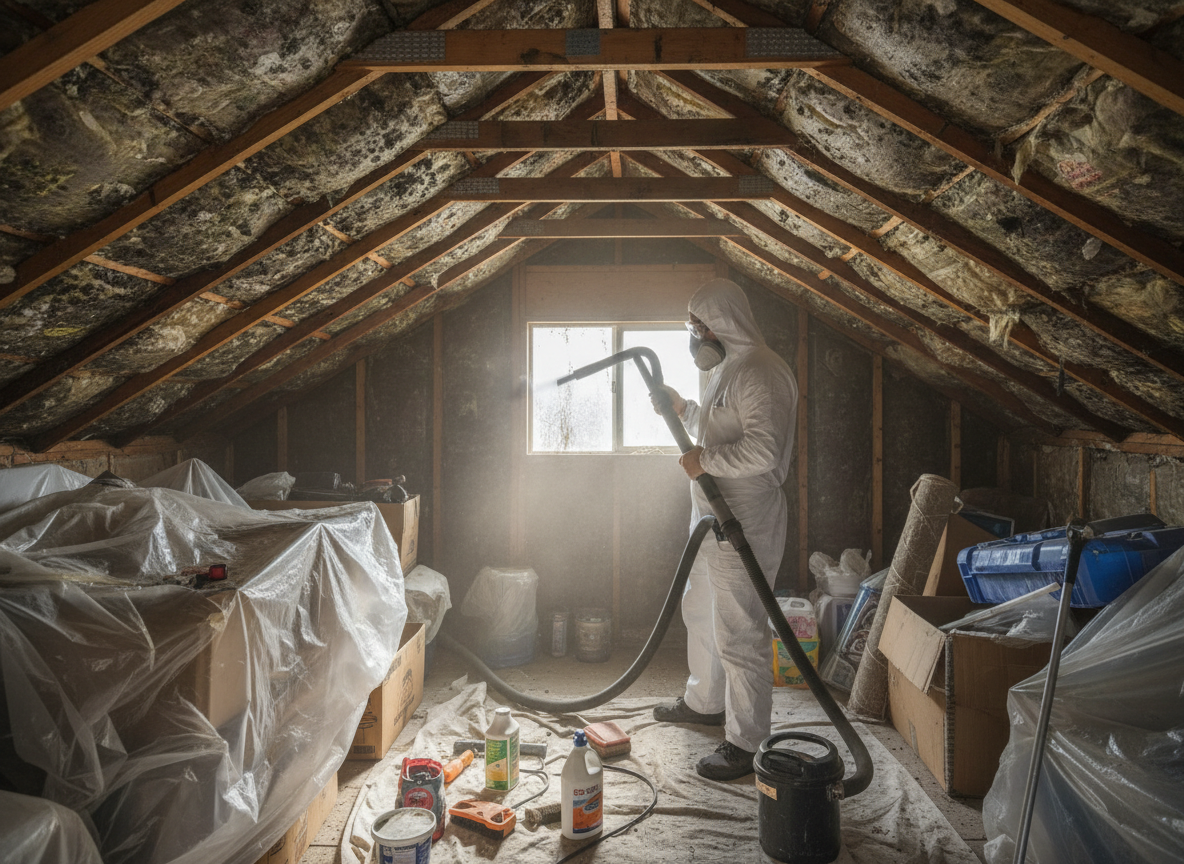
Capistrano Beach homes often feature older rooflines exposed to the mild Mediterranean climate with persistent coastal humidity. Attic mold remediation here requires checking for condensation on rafters and insulation in properties built before modern vapor barriers became standard. Salt air accelerates corrosion on vent pipes and metal flashing, creating hidden moisture traps that standard dehumidifiers miss. Technicians must seal penetrations around plumbing stacks near the San Clemente Pier corridor to stop recurring growth after winter fog events.
Edge cases in Dana Point and San Clemente border homes include mold traveling along shared attic spaces in duplexes and townhomes. Removal involves HEPA vacuuming followed by antimicrobial treatments that withstand the area's high salt content without damaging wood framing. Homeowners frequently overlook crawl space to attic airflow paths that pull in marine layer moisture. Proper containment prevents spores from settling into living areas during the dry summer months when HVAC systems run continuously.
Local building practices in Orange County mean many attics lack adequate ridge venting, allowing warm air to trap against cool roof decks overnight. Remediation crews inspect for this before any insulation replacement to avoid trapping residual moisture. Electrical wiring in pre-1980s homes near Capistrano Beach Park can be compromised by prolonged dampness, requiring coordination with licensed electricians during cleanup. Documentation of affected square footage and moisture readings ensures the job meets insurance requirements without over-scoping.
Technician insight
In Capistrano Beach, the thing that catches most people out with attic mold remediation is salt-laden marine air corroding older roof vents faster than inland Orange County homes, especially in properties near Capistrano Beach Park where fog lingers and drives condensation under the roof deck.
Fog-Driven Mold in 1970s Capistrano Beach Attic
Homeowner reported musty odor after several days of coastal fog. Inspection revealed black mold along rafters and insulation in a home two blocks from Capistrano Beach Park. Crew contained the space, removed contaminated materials, treated surfaces, and added ridge venting. Follow-up confirmed dry conditions and no recurrence after the next marine layer event.
How it works
- 1
Initial Inspection
Assess attic access points, moisture levels, and mold extent using thermal imaging in homes along Pacific Coast Highway.
- 2
Containment Setup
Isolate the work area with plastic sheeting and negative air machines to protect living spaces from spore migration.
- 3
Removal and Treatment
HEPA vacuum affected surfaces, remove contaminated insulation, and apply antimicrobial solutions suited to coastal salt exposure.
- 4
Ventilation Correction
Improve airflow with added ridge vents or powered fans to counter the marine layer humidity common in Capistrano Beach.
- 5
Final Verification
Conduct post-remediation moisture checks and provide a written report before restoring attic access.
Pricing
Costs depend on attic size, mold extent, and any needed ventilation upgrades in older Capistrano Beach homes.