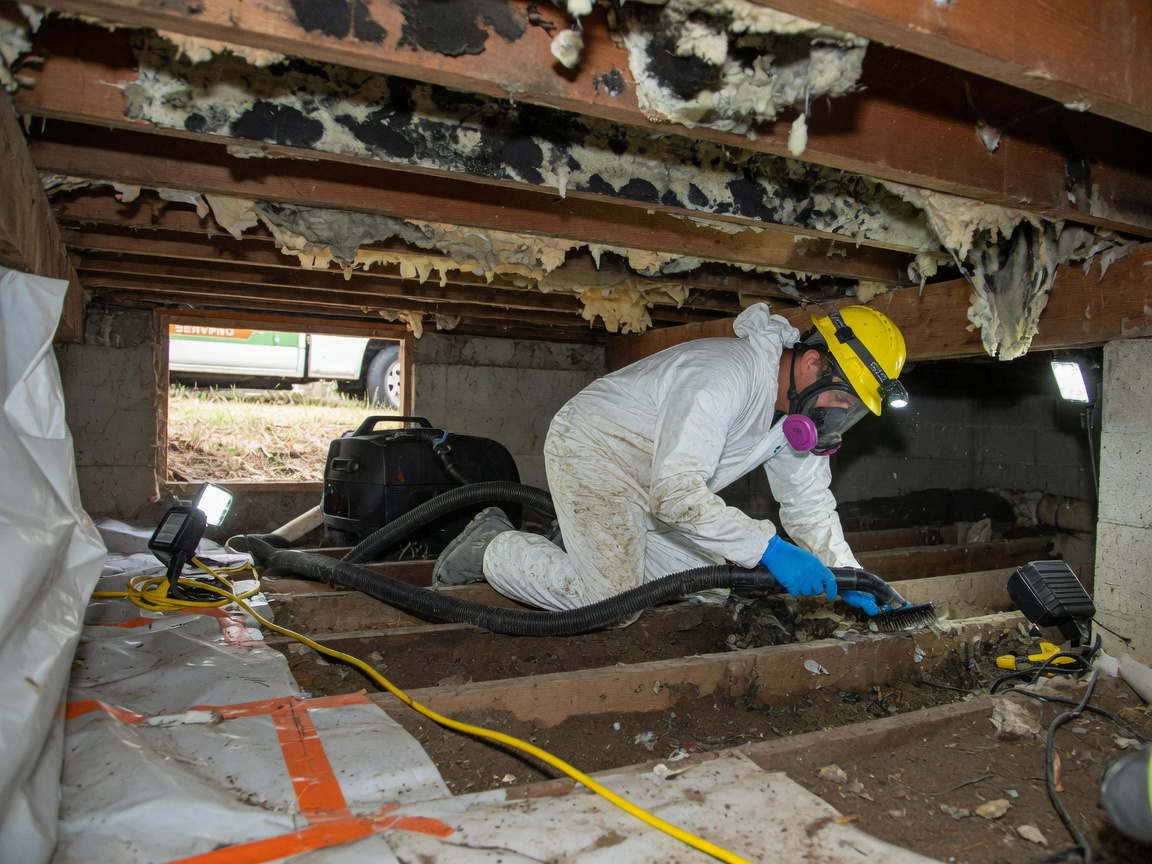
Capistrano Beach homes built before the 1980s often sit on raised foundations with vented crawl spaces that pull in moist air from the nearby Pacific. The mild Mediterranean climate keeps temperatures moderate year-round, but salt-laden coastal air and occasional winter rains drive relative humidity high enough for mold to colonize insulation, joists, and subfloor plywood. Left untreated, spores migrate through floor registers into living areas, especially in neighborhoods within a few blocks of Capistrano Beach Park.
Removal begins with containment and negative-air machines to prevent cross-contamination into the main house. Technicians remove saturated insulation, treat framing with EPA-registered antimicrobials, and install vapor barriers over soil to cut ongoing moisture. In Dana Point and San Clemente border homes, we frequently find that poor original grading allows runoff to pool against stem walls, so exterior drainage corrections are often paired with the interior work.
After drying to under 12 percent moisture content, we recommend sealing vents on the ocean side during high-surf events and adding a dehumidifier controlled by a crawl-space thermostat. This approach matches the actual conditions we see on jobs between the San Clemente Pier and the northern edge of Capistrano Beach where salt air accelerates corrosion on untreated metal straps and fasteners.
Homeowners sometimes attempt bleach sprays or foggers without addressing the water source; those surfaces quickly re-grow because the underlying moisture from coastal fog and occasional El Niño rains remains. We document hidden plumbing leaks and recommend fixing them before any finish work so the mold does not return within a single season.
Technician insight
In Capistrano Beach the thing that catches most people out with crawl space mold removal is the steady salt-air humidity that never really drops even in summer. Older raised-floor homes near Capistrano Beach Park often have original vent openings facing the ocean; once fog rolls in, those vents feed moisture straight to the underside of the subfloor and insulation stays damp for weeks.
Hidden Growth After Winter Rain Near San Clemente Pier
A homeowner in a 1970s house two blocks from the pier noticed musty odors after heavy December rain. We found standing water against the north stem wall and black mold on the joists above a former washing-machine leak. After removing wet insulation, treating the framing, and adding a sealed vapor barrier plus exterior French drain, the crawl space dried and the odor disappeared within ten days.
How it works
- 1
Inspection and Moisture Mapping
We enter the crawl space, measure wood moisture, and identify active leaks or grading issues common along Pacific Coast Highway.
- 2
Containment and Removal
Plastic barriers isolate the space; wet insulation and heavily colonized wood are cut out and bagged for disposal.
- 3
Antimicrobial Treatment
EPA-registered products are applied to joists and subfloor, followed by HEPA vacuuming of all surfaces.
- 4
Drying and Moisture Control
Air movers and dehumidifiers run until readings stabilize; a sealed vapor barrier is installed over soil.
- 5
Final Clearance and Prevention
Independent moisture checks confirm dryness; we advise on vent covers and drainage fixes to handle Capistrano Beach winter rains.
Pricing
Cost depends on square footage of the crawl space, depth of mold into joists, and whether exterior drainage repairs are required.