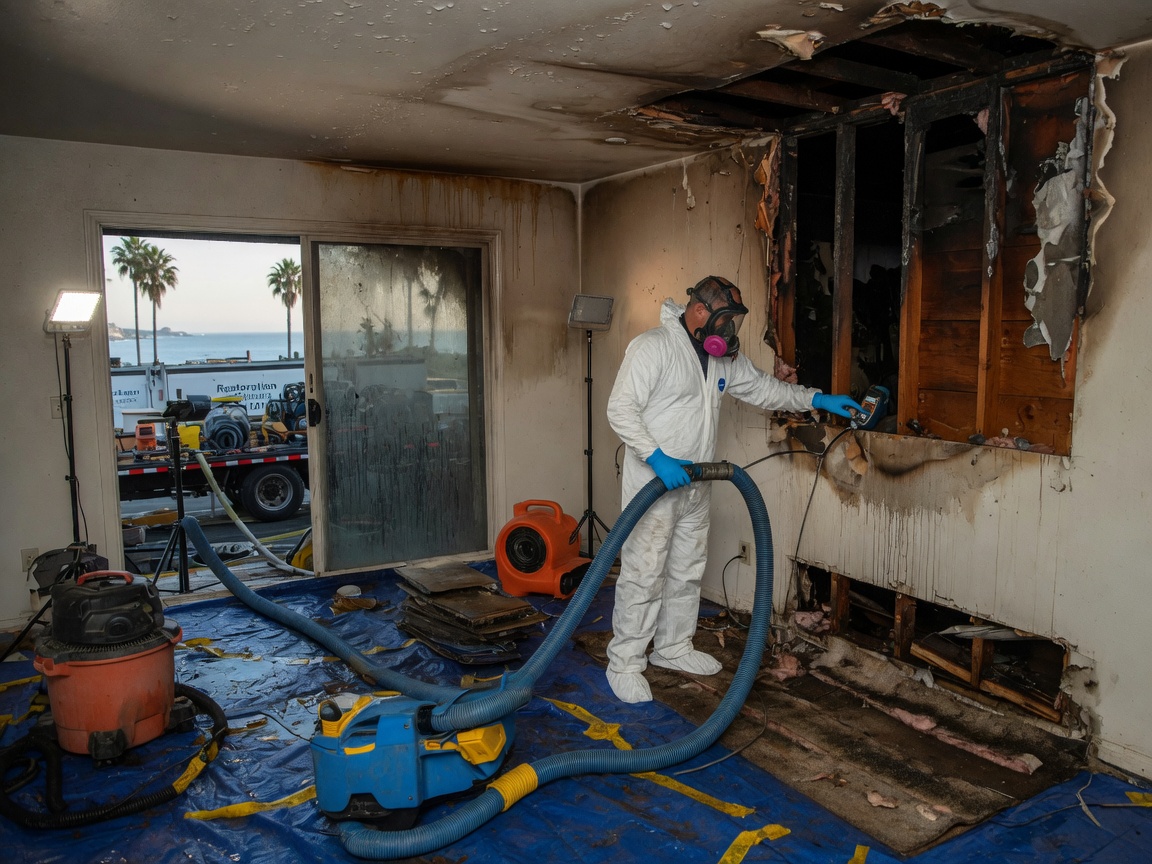
Capistrano Beach homes near Capistrano Beach Park and the San Clemente Pier often feature older wood-frame construction exposed to the mild Mediterranean climate with constant coastal humidity. When fire suppression water saturates these structures, it quickly migrates into wall cavities and subfloors, promoting mold growth within 48 hours if not extracted properly. Technicians must account for salt-laden air that accelerates corrosion on wiring and metal framing, requiring extra drying time compared to inland Orange County properties in San Clemente or Dana Point.
Firefighting water carries soot and chemicals that bind to porous materials like drywall and insulation common in beachside residences. Standard extraction alone fails here because residual moisture trapped behind baseboards or in attic spaces can re-wet surfaces days later due to the area's high dew points. Remediation crews use moisture meters and thermal imaging to locate hidden pockets, then apply antimicrobial treatments suited to the local environment before rebuilding begins.
Homeowners sometimes attempt DIY drying with box fans, but this spreads particulates and fails against the layered damage typical after structure fires in Capistrano Beach. Professional teams separate salvageable items, document affected zones for insurance, and coordinate with local disposal rules for contaminated debris. The process prevents long-term issues like warped flooring or electrical faults that surface during the next heavy coastal fog event.
Technician insight
In Capistrano Beach, the thing that catches most people out with water damage remediation after fire is how the constant salt air from the Pacific accelerates rust on copper pipes and electrical boxes once firefighting water has soaked them. Homeowners often focus on visible char but miss how humidity here keeps hidden cavities damp long after inland jobs would be dry.
Post-Fire Water Intrusion in Beach Home
A kitchen fire in a Capistrano Beach residence triggered sprinklers and firefighter hoses that flooded the first floor and soaked into the crawlspace. Crews found standing water mixed with soot had reached the subfloor near the San Clemente border. Extraction and targeted drying prevented mold in the older wood framing, allowing the family to return after two weeks.
How it works
- 1
Initial Assessment
Technicians arrive within hours, document water intrusion points from firefighting efforts, and test moisture levels throughout the structure.
- 2
Water Extraction and Containment
Standing water is removed using pumps and vacuums while isolating soot-affected zones to prevent cross-contamination.
- 3
Drying and Monitoring
Industrial dehumidifiers and air movers run until readings reach pre-loss levels, with daily checks to adjust equipment placement.
- 4
Cleaning and Odor Removal
Surfaces receive HEPA vacuuming and antimicrobial application; air scrubbers address smoke odors embedded in coastal humidity.
Pricing
Costs depend on square footage affected, depth of water penetration, and whether contents require separate handling.