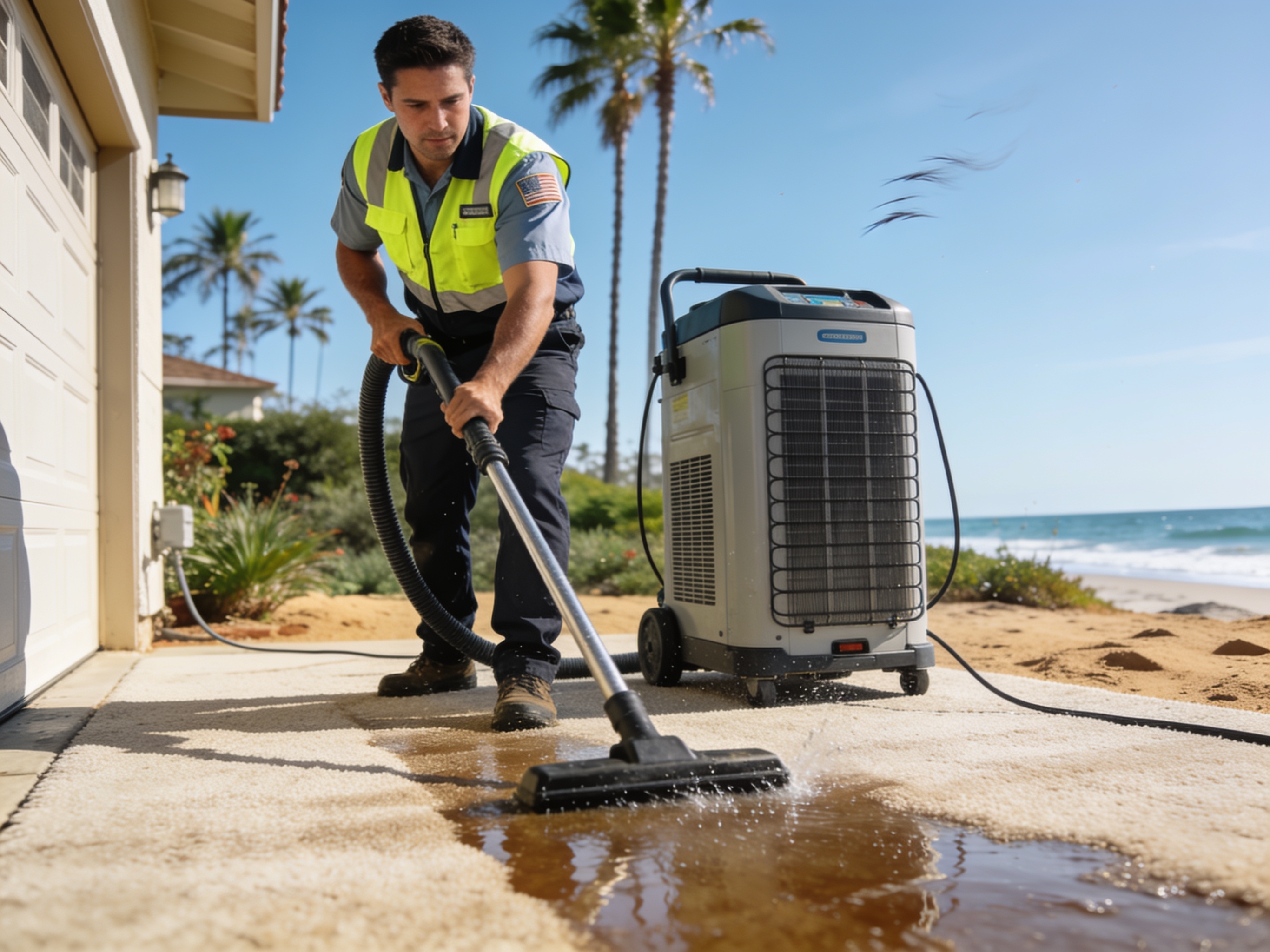
Capistrano Beach homes built before the 1980s often sit on raised foundations with narrow crawl spaces that trap water from winter storms rolling in off the Pacific. Extraction crews must maneuver portable pumps and wands through tight access points while watching for salt-laden moisture that accelerates corrosion on copper pipes and electrical boxes. Because the mild Mediterranean climate keeps humidity elevated year-round, any standing water left behind quickly migrates into stucco walls and oak flooring common in the neighborhood.
Near San Clemente Pier and the Dana Point border, storm drains can back up during heavy coastal rains, sending water under garage slabs. Technicians use truck-mounted extraction units rated for several hundred gallons per minute, followed by moisture meters to confirm removal from concrete and subflooring. Failure to pull water completely from these slabs leaves residual dampness that feeds mold growth weeks later, especially in the older ranch-style homes along Pacific Coast Highway.
Water extraction in this area also requires separating fresh water from occasional tidal or sewer backups that reach low-lying lots near Capistrano Beach Park. Crews deploy containment barriers and HEPA air movers immediately after pumping to manage the higher vapor load created by ocean proximity. Homeowners who attempt DIY shop-vac removal often miss water trapped under built-in cabinetry, leading to repeated callbacks once the wood begins to swell.
Technician insight
In Capistrano Beach, the thing that catches most people out with water extraction company is how ocean humidity keeps subfloor plywood damp long after the pumps leave, especially in the 1960s beach cottages along Pacific Coast Hwy where vapor barriers were never installed.
Storm runoff under garage slab
Heavy rain sent water under a Capistrano Beach home's garage slab near the park. Extraction revealed standing water trapped against the foundation footings. Crews pumped several hundred gallons, then ran drying equipment for three days until moisture readings dropped below 12 percent. The homeowner avoided slab replacement.
How it works
- 1
Site Assessment
Technicians inspect all affected rooms, crawl spaces, and slab edges using moisture meters and thermal imaging to map hidden water.
- 2
Water Removal
Truck-mounted and portable pumps extract standing water while containment barriers prevent spread to unaffected areas.
- 3
Drying and Monitoring
High-velocity air movers and dehumidifiers run until readings confirm drywall, flooring, and framing are dry.
- 4
Final Clearance
Post-extraction walkthrough with the homeowner verifies all moisture is gone and surfaces are ready for repairs.
Pricing
Cost depends on water volume, access difficulty in older crawl spaces, and whether salt water or sewage is involved.